A Melbourne Owner's Guide to Caring for a Custom Suit
Practical storage, cleaning, and rotation habits that keep a bespoke suit looking sharp through Melbourne's four seasons in one day.
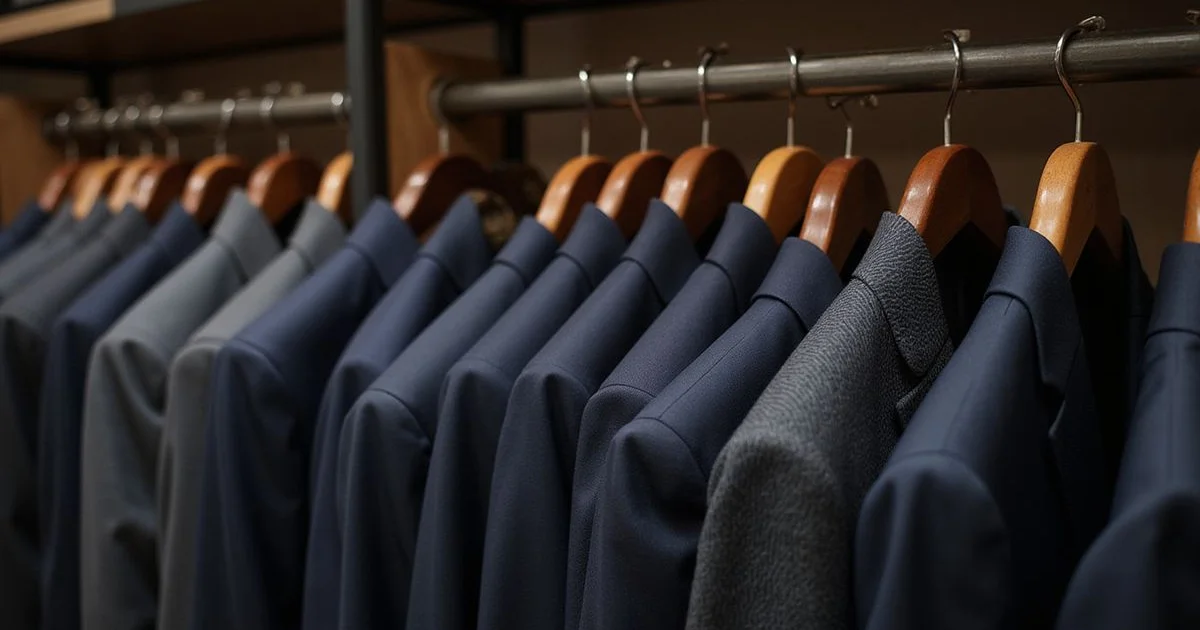
A well-made suit behaves like a living thing. It responds to humidity, to the weight of what you carry, to how you sit, even to how often you let it breathe. In a city like Melbourne, where you can leave home in light drizzle and finish the day under 30 degree sunshine, owners of quality garments have a slightly harder job than those in more stable climates.
Three generations of One Tailor experience has taught us that the gap between a suit that lasts five years and one that lasts thirty is almost entirely about habits, not construction. Here is the routine we teach every client who walks through our Lonsdale Street door.
Why Melbourne’s Weather Demands More From Your Suits
Our temperate oceanic climate swings hard and often. Wool fibres absorb moisture from morning fog along the Yarra, then release it again when the afternoon heat builds. A suit that never rests never finishes that cycle, and the fibres begin to collapse.
The single most powerful habit you can adopt is rotation. Never wear the same jacket and trousers two days in a row. Give each garment at least 24 to 48 hours on the hanger between wears so the natural lanolin in the wool can recondition the fibres.
The Hanger Problem Nobody Talks About
We see beautiful suits arrive for alterations with shoulders already dented from thin wire hangers picked up at a dry cleaner. The hanger has to mimic your own shoulder shape. A contoured wooden hanger with a flare of at least 50 to 60 mm supports the pad structure and lets the canvas settle naturally.
| Feature | Wire Hanger | Contoured Wooden Hanger |
|---|---|---|
| Shoulder support | Pinpoint only | Broad, anatomical |
| Effect on structure | Creates bumps | Preserves the silhouette |
| Typical material | Thin metal | Beech, maple, or walnut |
| Trouser support | Sharp creases | Felted bar prevents slipping |
Empty the pockets every evening. A heavy phone or wallet lived in the same pocket for a year will permanently deform the lining and eventually the outer shell.
Brushing: The Habit That Saves You From Dry Cleaning
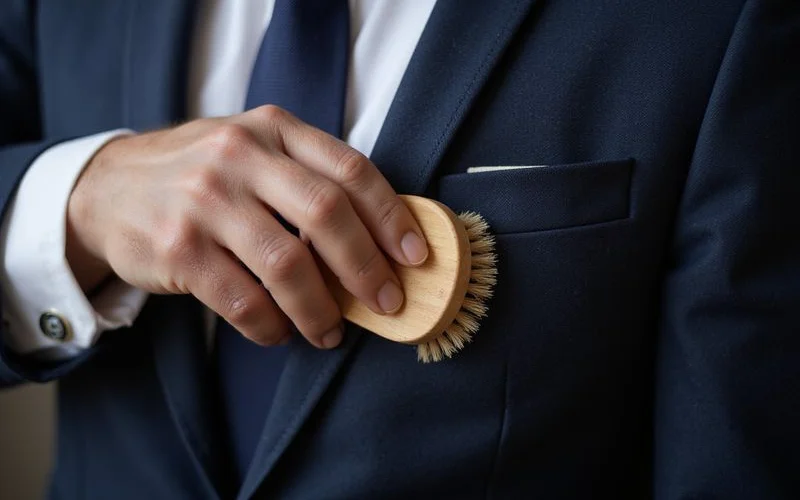
A natural bristle clothes brush costs less than a bottle of wine and will do more for your wardrobe than any cleaning service. Dust, pollen from the Royal Botanic Gardens, and tram-stop grit all work like tiny abrasives against the wool. A 30-second brush after each wear removes that debris before it settles.
Brush lightly upward to lift trapped particles, then back down to settle the nap. Pay particular attention to the collar area where skin oils and hair product accumulate.
Spot Treatment for the Inevitable Coffee Spill
Flinders Lane and Little Collins Street are dense with good coffee, which means accidents are common. Blot a fresh spill gently with a clean white cloth, working from the outside of the stain toward the centre so you do not create a ring.
Avoid rubbing. Wool felts when it is wet and friction is applied, and felted patches are effectively permanent. For oil-based stains, stop and bring the garment to a professional. Home remedies tend to drive oil deeper into the weave.
Dry Cleaning: Less, Not More
We find most Melburnians over-clean their suits. The solvents used by commercial cleaners strip the wool of its natural oils and leave it brittle. A quality wool suit worn sensibly and brushed after each wear only needs a genuine clean once or twice a year.
If the garment smells a little stale but is not stained, ask your cleaner for a “sponge and press” service. It refreshes the drape and lifts creases without bathing the fabric in chemicals.
Steam, Not an Iron
A domestic iron pressed directly onto wool will crush the fibres and leave a permanent shine. A handheld garment steamer is safer for home use. Hang the jacket, let the steam drift through from 30 to 50 mm away, and allow gravity to release the wrinkles. This technique is especially useful the morning after a damp ride home on a tram when the shoulders have settled oddly.
Storing Between Seasons
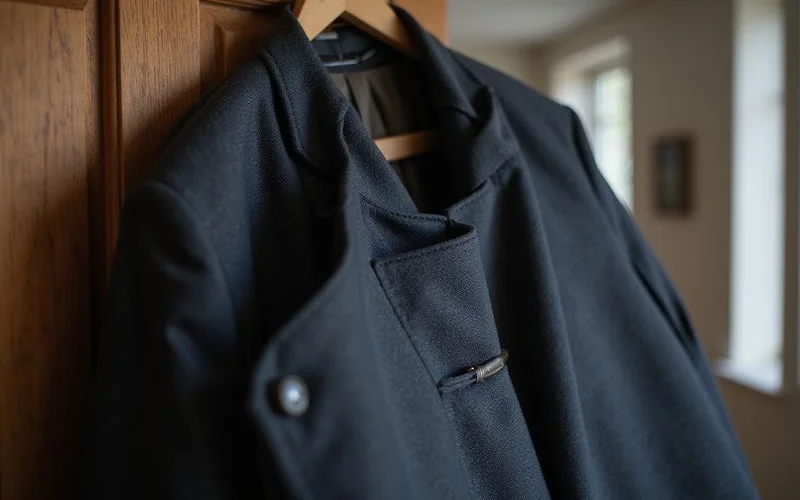
When the warmer months arrive and your flannels go into storage, a few rules apply:
- Clean first. Invisible body oils are a magnet for moth larvae. Never store a soiled garment.
- Use breathable bags. Canvas or cotton only. Plastic traps humidity, which is disastrous in Melbourne’s damp winters.
- Refresh your cedar. Cedar blocks only repel moths for about three months before the oils fade. Sand them lightly to reactivate.
- Choose a stable wardrobe. Avoid attics where heat swings are extreme and basements prone to humidity.
Travelling With a Suit
If you are flying to Sydney for a meeting or driving up to the Yarra Valley for a wedding, a travel routine helps. Turn the jacket inside out, nest one shoulder into the other, and roll it gently into a dedicated garment bag. On arrival, hang it in the hotel bathroom while you take a hot shower. The ambient steam releases minor creases within ten minutes.
Build a Relationship With a Tailor
A dry cleaner cannot solve a loose lining, a sagging lapel, or a button that is slowly tearing away from the cloth. A skilled tailor can. Come in for a yearly check-up the same way you would service a good bicycle. Small interventions extend the life of the garment dramatically.
At One Tailor, we also handle alterations for garments we did not originally build. If something in your wardrobe deserves another decade of wear, bring it to us and we will tell you honestly whether it can be saved.
Jason Nick
Expert insights from the One Tailor team in Melbourne.