Understanding Premium Shirt Fabrics: Mills, Weaves, and What Actually Lasts
A guide to premium shirting cloth from Thomas Mason, Albini, and other heritage mills, explained in plain language for Melbourne professionals.
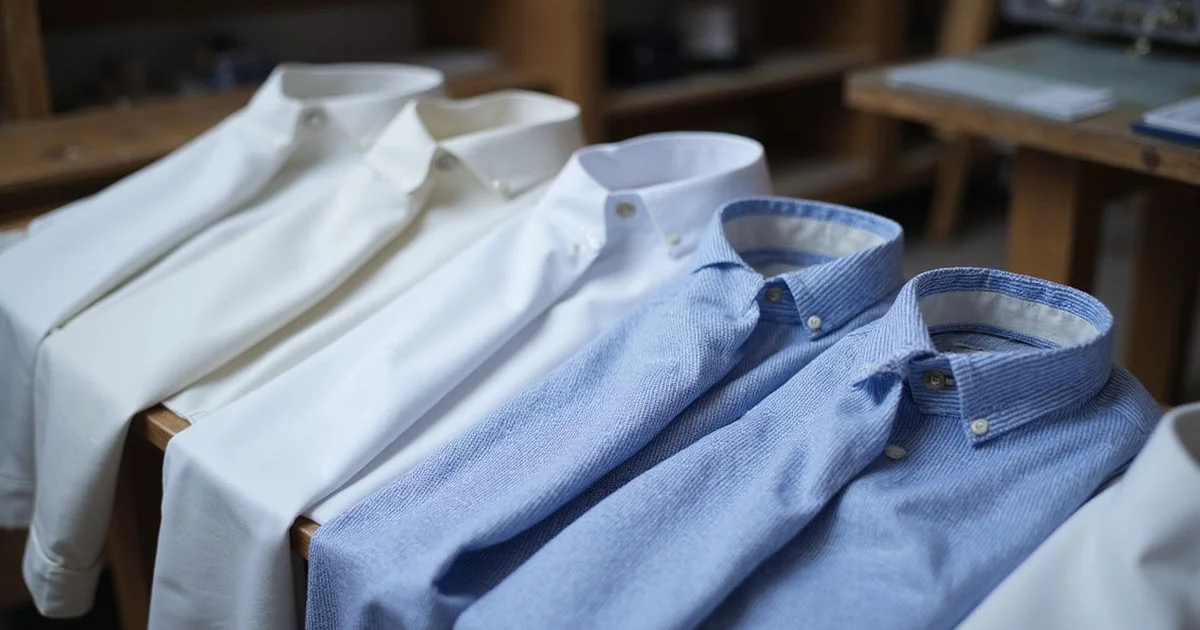
When clients come to One Tailor for their first custom shirts, the fabric books are usually the part of the appointment that takes the longest. That is how it should be. Fabric is the single largest variable in how a shirt feels, how it photographs in a boardroom, and how long it lasts before looking tired.
Three generations in tailoring has taught us that most marketing language around shirting cloth is either misleading or incomplete. What follows is a plain explanation of the mills we rely on, the technical markers that actually matter, and how to match a cloth to Melbourne’s unusual working climate.
Why the Mill Still Matters
Modern weaving machinery is widely available. What separates the heritage mills from anonymous factories is not hardware but consistency, fibre sourcing, and finishing. A small number of European mills have been perfecting these details for generations and continue to set the benchmark.
Thomas Mason. Founded in Lancashire in 1796, now based in Italy under the Albini umbrella since 1992. Famous for its archive of more than 700 volumes of historical designs and for its Goldline collection, which uses long-staple Egyptian Giza 45 cotton that softens beautifully with age.
Albini. The parent group, family-run since 1876 and the largest European shirting manufacturer. Vertically integrated from cotton to finished bolt. Their BIOFUSION line offers fully traceable organic cotton for clients who care about provenance.
Canclini. Based near Lake Como, originally a silk producer before moving to cotton in the twentieth century. Their finishing is among the softest in the industry, which is why we favour them for casual and weekend shirting.
David & John Anderson. Also part of Albini. Specialises in ultra-fine yarn counts (200/2s, 300/2s) for clients who want the absolute upper limit of refinement. These fabrics are delicate and require professional laundering.
At our Lonsdale Street studio we work primarily from Thomas Mason and Albini books because they offer the most consistent performance for daily business wear in Melbourne conditions.
The Three Technical Markers That Actually Matter
Ignore vague words like “premium.” Focus on three measurable characteristics.
Fibre Length
Cotton is graded by the length of its individual fibres, called “staple.”
- Extra-long staple (ELS): fibres exceeding 35 mm. Includes Egyptian Giza varieties and American Supima.
- Giza 45: grown in a tiny corner of the Nile Delta and harvested by hand.
- Sea Island: grown in the Caribbean, accounting for less than 0.004 percent of global cotton production.
Longer fibres spin into smoother, stronger yarns with fewer end-points. This means less pilling, a softer hand, and more durability through repeated washing.
Yarn Count and Ply
Cloth specifications like 100/2 or 140/2 tell you two things. The first number is the yarn count (fineness), and the second is the ply (how many individual strands are twisted together before weaving).
| Specification | Description | Best Use |
|---|---|---|
| 80/2 to 100/2 | Substantial, durable | Daily business shirts, travel rotation |
| 120/2 to 140/2 | Silky, refined, lighter | Boardrooms, formal events |
| 170/2 and above | Extremely fine, fragile | Black tie, professional laundering only |
| Single ply | One strand, weaker, cheaper | Casual warm-weather shirts |
Two-ply yarns are significantly stronger than single-ply for the same weight. For anything you will wear regularly, two-ply is the sensible choice.
Finishing
Raw woven cloth is rough. Good mills treat the surface using a process called mercerisation, which swells the fibres to increase lustre, dye uptake, and dimensional stability. Cheaper mills skip this step or rely on chemical softeners that wash out within a few cycles.
The Weaves You Need to Recognise
Poplin
The benchmark business shirting. A simple over-under weave, typically lightweight at around 100 to 110 grams per square metre. Crisp, smooth, and ideal for summer in Melbourne when the afternoon temperature climbs toward 30 degrees. Its main weakness is wrinkle resistance. If you travel constantly without a steamer, poplin will test your patience.
Twill
Identifiable by its diagonal texture or “wale.” Heavier than poplin, drapes cleanly, and masks minor fit issues. Wrinkle resistance is naturally higher thanks to the weave structure. White twill is also less transparent than white poplin, so it hides a singlet or undershirt more effectively.
Oxford Cloth
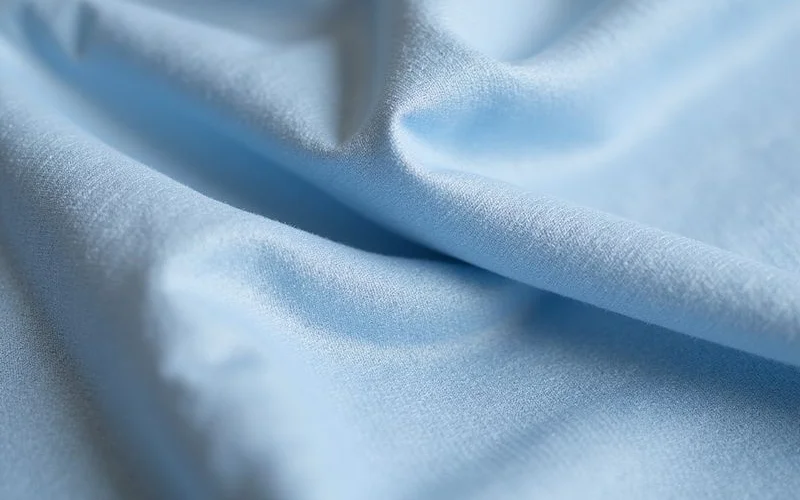
A basket weave where multiple weft threads cross an equal number of warp threads. Originally designed for polo shirts, it is durable, forgiving, and softens over time. Pairs beautifully with jeans or chinos. Standard Oxford is heavier (around 160 grams per square metre), which makes it a good choice for cooler Melbourne mornings and the damp winter stretch from June through August.
Royal Oxford
Despite sharing a name, this is quite different. Finer yarns and a more intricate weave create a subtle diamond texture. Holds a dressier appearance than standard Oxford while remaining surprisingly breathable.
Herringbone
A variation of twill where the diagonal reverses direction to form a chevron pattern. Adds visual depth to solid colours, presses easily, and resists stubborn creases.
End-on-End
A poplin variant using a white thread against a coloured thread. Reads as solid from a distance but reveals a subtle heathered texture up close. Excellent depth of colour, though it shares poplin’s wrinkle tendencies.
Matching Cloth to Melbourne’s Climate
Our city’s “four seasons in one day” reputation is real, and it affects how a shirt performs.
- Summer and autumn: Lightweight poplin or fine herringbone under 110 grams per square metre. Breathability is essential when the CBD bounces between air conditioning and hot laneways.
- Winter (June to August): Heavier twill or Oxford around 160 grams per square metre. Provides insulation during grey, damp weeks.
- Year round workhorse: Mid-weight twill. If you commission only one shirt, make it this.
The Investment Perspective
A custom shirt in premium Thomas Mason or Albini cloth at One Tailor typically sits between AUD 220 and AUD 340, depending on specification. A comparable off-the-rack shirt made from short-staple cotton on a basic machine buttonhole might cost AUD 90 to AUD 150.
| Feature | Mass Market Shirt | Premium Custom Shirt |
|---|---|---|
| Cotton source | Short-staple, prone to pilling | Giza or Supima, softens over time |
| Buttons | Plastic, prone to cracking | Mother of pearl, heat resistant |
| Measurements | Neck and sleeve only | 15 plus measurements |
| Expected life | 30 to 40 washes | 150 plus washes |
Over a five-year horizon, the cost-per-wear on a well-specified custom shirt is usually lower than on its cheaper alternative. You are buying construction, finish, and a fit that was built for you.
Building a Core Rotation
We recommend six anchor shirts for any working wardrobe.
- White poplin. Authoritative, for presentations and high-stakes meetings.
- Light blue twill. A daily workhorse that flatters most skin tones.
- White royal Oxford. Texture and versatility in one cloth.
- Blue Bengal stripe. Adds energy to a solid charcoal or navy suit.
- Pink or lavender micro-check. Warm, approachable, still professional.
- Blue heavy Oxford. The weekend and smart-casual anchor.
That core rotation handles nearly every situation a Melbourne professional will encounter in a year.
Experiencing the Cloth in Person
Digital swatches cannot convey the weight, hand, or drape of a real fabric. Come into our Lonsdale Street studio and turn the pages of a Thomas Mason book yourself. You will feel the difference between an 80/2 and a 140/2 in your fingertips within seconds.
There is no pressure to commission anything on the day. If you would like to book a fabric appointment, contact us and we will set aside time to walk you through the options.
Jason Nick
Expert insights from the One Tailor team in Melbourne.