Your First Bespoke Fitting in Melbourne: A Step-by-Step Walkthrough
What actually happens during a first bespoke consultation at One Tailor, from fabric selection to measurements and final design decisions.
Walking into a bespoke tailor’s workshop for the first time can feel strangely formal. The unfamiliar geography of cutting tables, pressing boards, and rows of cloth books, plus the sense that you are about to make decisions about a garment you will wear for years, is enough to raise the heart rate of anyone who is used to being the expert in their own field.
We see this hesitation weekly at our One Tailor studio on Lonsdale Street. It usually disappears within ten minutes and is replaced by something much better, the slight relief of being listened to properly for the first time in a clothing purchase. Here is what actually happens during a first consultation, and how you can prepare to get the most out of it.
Before You Arrive
You do not need to know anything about textiles or construction to have a productive first visit. A little reflection in advance helps us focus the appointment.
Define the garment’s purpose. Is this a board-meeting suit, a wedding commission for the Yarra Valley in March, a Spring Racing statement piece, or a daily rotation workhorse? Each use case shapes every decision from cloth weight to lapel style.
Audit what you already own. Which suits make you feel confident and which sit at the back of the wardrobe? These answers tell us about your personal preferences faster than any questionnaire.
Wear a real shirt. A properly fitting dress shirt gives us a clean silhouette to work around. A baggy t-shirt hides your natural shoulder line and makes the first visual assessment harder.
Write down questions. First-time clients almost always forget something they wanted to ask. A note in your phone is enough.
The Opening Conversation
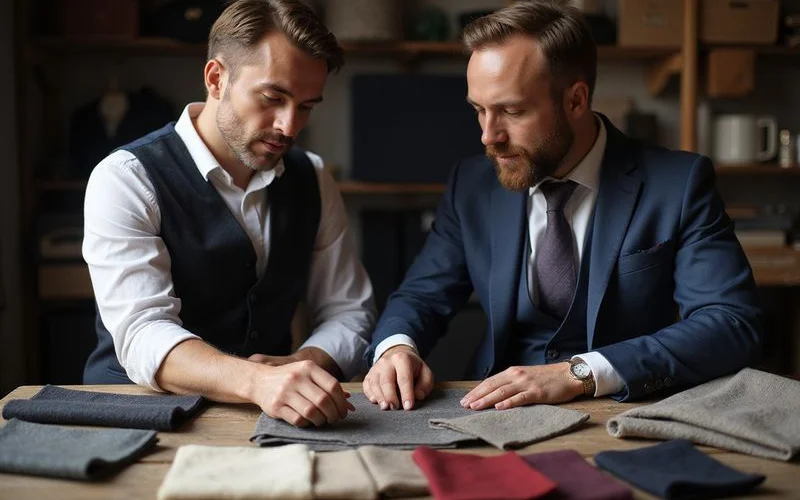
The first fifteen minutes are deliberately unhurried. Before any measurements, we want to understand who you are, what rooms you work in, and what problems your current wardrobe fails to solve. The questions we tend to ask include:
- Daily environment. How much of your day is spent seated, walking between CBD offices, or driving to client sites?
- Aesthetic preferences. Do you lean toward a structured English shoulder or a softer Italian drape?
- Physical history. Old shoulder injuries, back issues, or posture habits will affect how we draft the pattern.
- Timeline. A full bespoke process takes 8 to 12 weeks, so an upcoming wedding or Spring Racing date shapes the schedule.
This conversation locks in the “why” before we touch a tape measure. It is also where we establish your budget, which at One Tailor typically ranges from AUD 2,800 for an entry-level commission to AUD 6,500 and up for premium cloths and highly refined details.
Choosing the Cloth
After the conversation, we move to the fabric books. This is the most enjoyable part of the visit for most clients. At One Tailor we source from historic European mills including Holland & Sherry, Dormeuil, Loro Piana, and Vitale Barberis Canonico.
Choosing for Melbourne’s Climate
Because our city swings hard between cool damp mornings and 30 degree afternoons, cloth weight matters more than clients expect.
| Weight | Imperial (oz) | Best Use Case |
|---|---|---|
| Tropical or lightweight | 7 to 8 oz (210 to 240 g) | Warmer months, especially for long outdoor events |
| Mid-weight (year round) | 9 to 10 oz (260 to 300 g) | The everyday workhorse for CBD office life |
| Heavyweight | 11 to 13 oz (320 g plus) | Winter flannels, overcoats, cooler travel |
For daily business wear under Melbourne’s sharp temperature swings, a high-twist mid-weight wool is usually our recommendation. It resists wrinkling during a tram commute and holds shape through a demanding day of meetings.
You will handle the cloth to feel how it drapes. There is no pressure to commit in the appointment. We regularly lend swatches to clients to see how a colour reads in natural daylight versus office fluorescents before they decide.
The Measurements
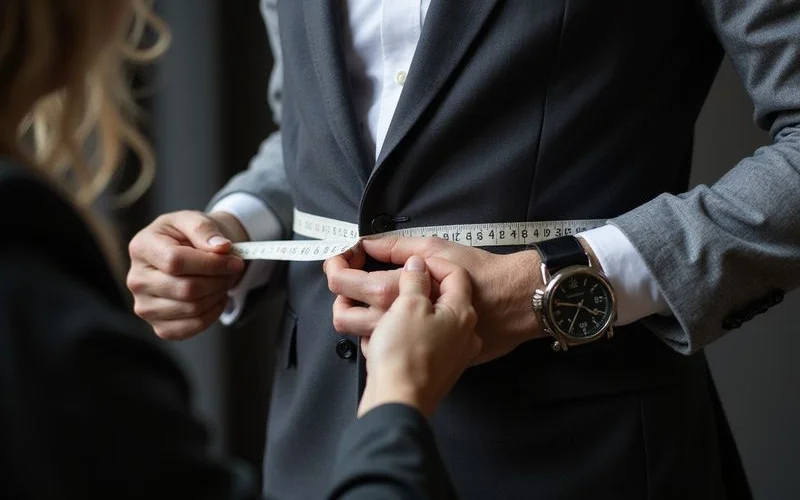
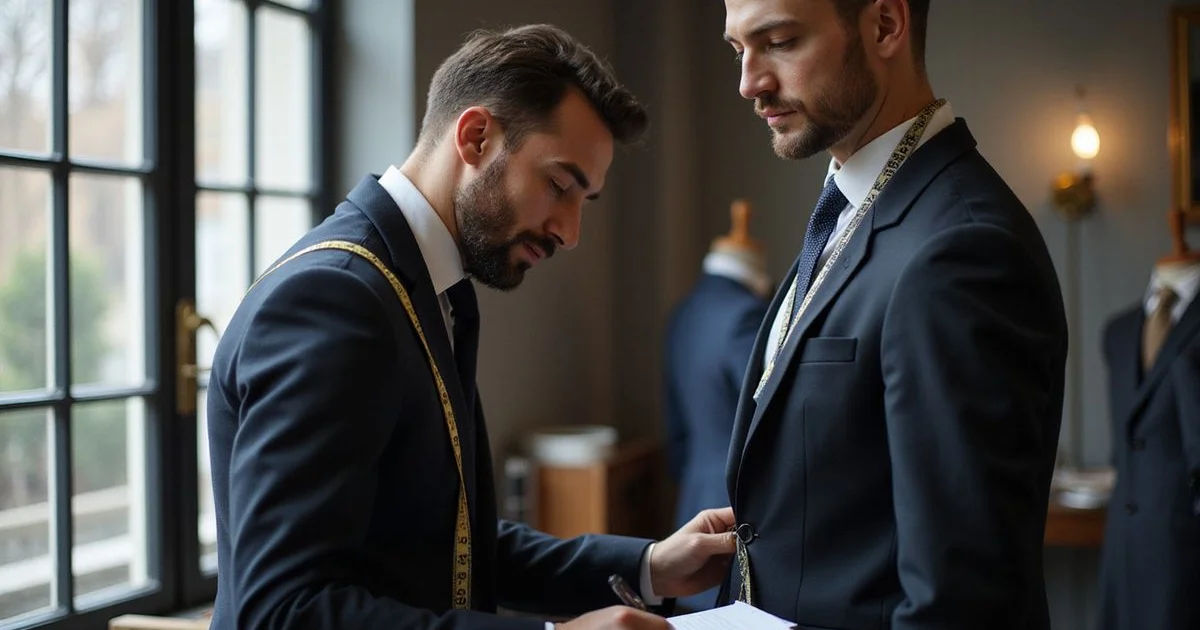
Measuring takes about 20 minutes and involves more than 30 distinct readings. It is deliberately calm. You stand naturally while we work around you with tape and notebook.
Beyond the numbers, we are also watching:
- Shoulder slope. Almost everyone has one shoulder slightly lower than the other.
- Head posture. Clients who spend long hours on screens often develop a slight forward head carry that affects collar geometry.
- Stance. Weight on one leg or locked knees changes how the trouser legs hang.
- Arm pitch. The natural angle of your arm at rest determines how the sleeve head should be rotated.
The tape measure tells us your chest is 1060 mm. Our eyes tell us how that circumference is distributed and how the cloth should move to accommodate a real person reaching for a phone, a coffee, or a handshake.
Design Decisions
Once measurements are locked in, we walk through the visible design choices.
Lapels.
- Notch. The timeless business default.
- Peak. More assertive and visually lengthens the silhouette.
- Shawl. Reserved for dinner jackets.
Button configuration.
- Two-button single-breasted. The modern gold standard.
- Three-button. Traditional, higher closure, often pared back to a “3-roll-2” for a modern look.
- Double-breasted. A confident statement that rewards good posture.
Vents.
- Double vent. Our usual recommendation. Practical and elegant.
- Single vent. Simpler, more common on casual jackets.
- No vent. For formal dinner jackets only.
We will make recommendations based on the earlier conversation, but every call is ultimately yours.
What Happens Next
A full first consultation runs 45 to 60 minutes. You leave with a locked price, a confirmed production schedule, and a clear understanding of the design. The craft then begins behind the scenes.
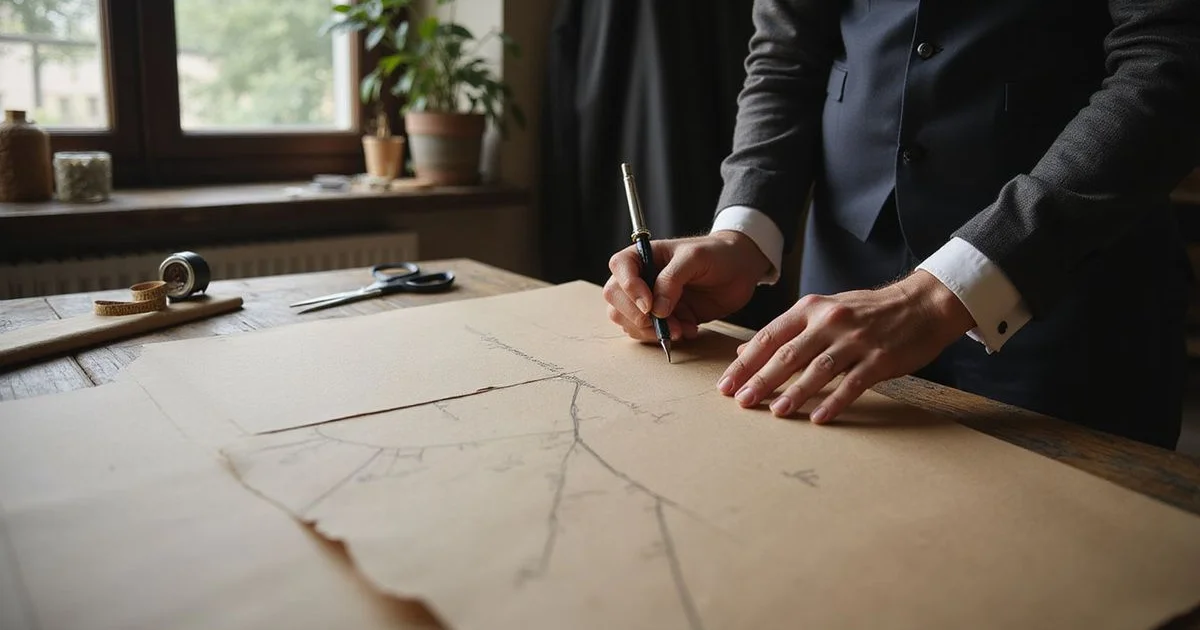
- Pattern drafting. A unique paper pattern is drawn for your body.
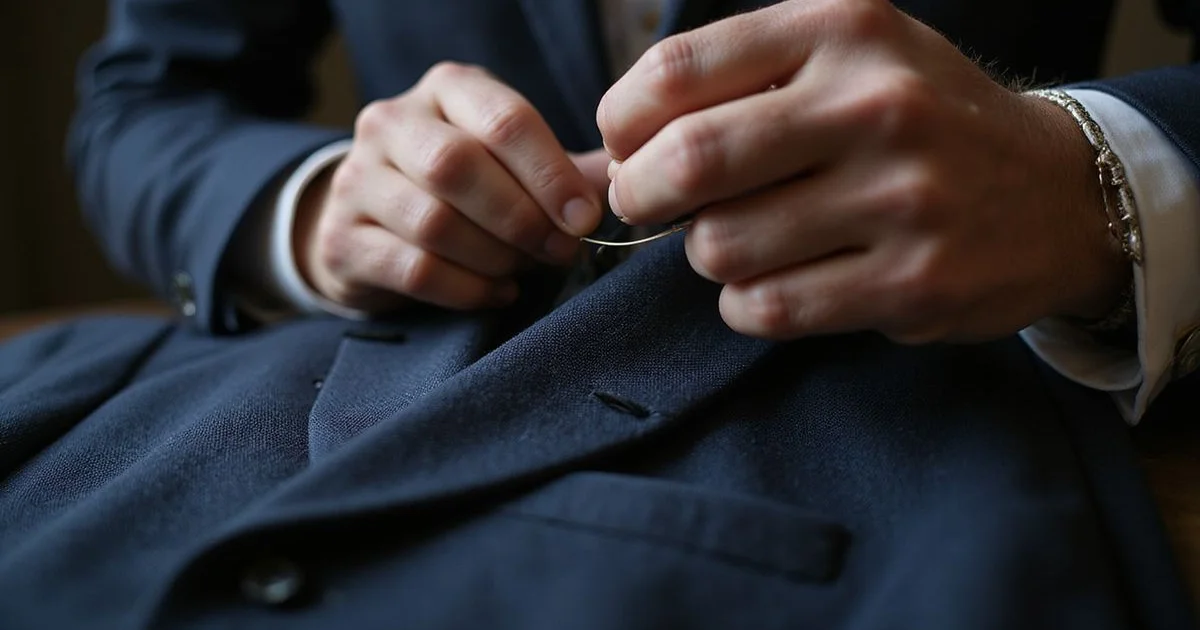
- Baste fitting (three to four weeks later). You try on a raw version of the jacket held together with white basting thread. We rip seams and re-pin as necessary to perfect the balance before the final cut.
- Forward fitting. Closer to completion, with the outer cloth set and final adjustments taking place.
- Finish and collection. The garment is pressed, detailed, and ready to take home.
A Few Words of Advice
The best thing you can do is be honest. If you hate the feeling of tight trousers, say so. If you get hot under meeting room lights, say so. If a previous suit pulled across the back every time you reached for a coffee, describe it in whatever words come naturally.
This process is a collaboration. The more candid information you share, the better the final commission will match the life you actually live.
There is no obligation to proceed after a first visit. A consultation is a discovery session first and a purchase opportunity second. If you would like to see what the process is like in person, book a complimentary consultation or read more on our bespoke suits page.
Jason Nick
Expert insights from the One Tailor team in Melbourne.