Dress Shirt Collar Styles: A Practical Guide for Modern Professionals
How to choose the right collar shape for your face, your tie, and the rooms you work in, explained by a third-generation Melbourne tailor.
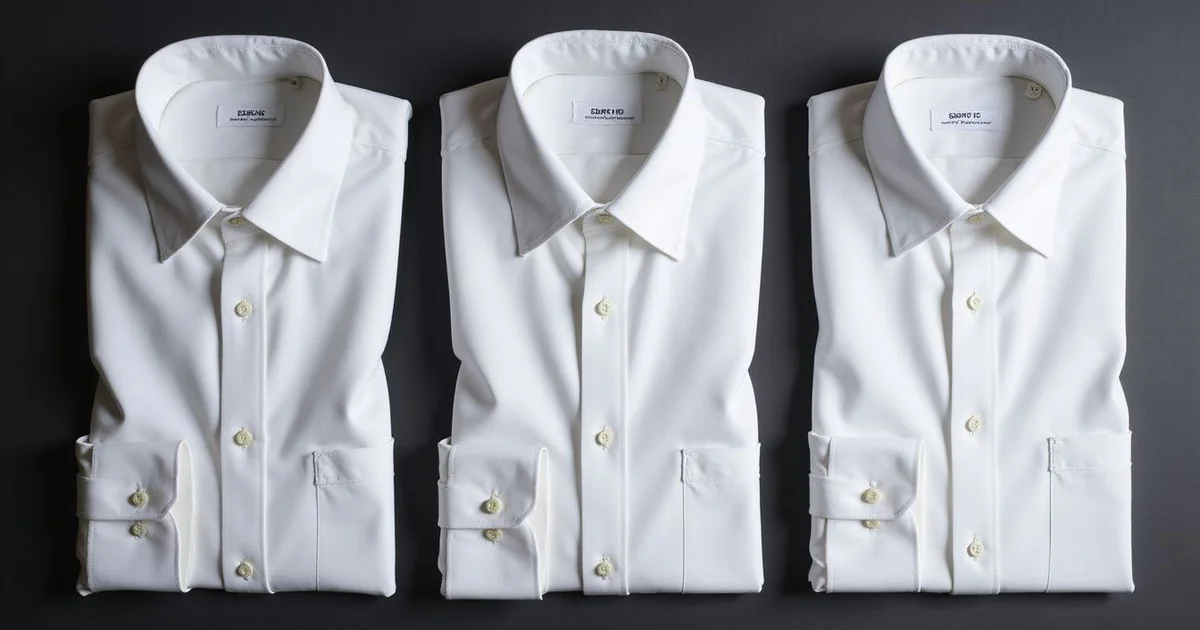
The collar is the most photographed centimetre of your wardrobe. It appears on every video call, in every client handshake, and in every boardroom photograph. Yet most clients who walk into our studio have never made a deliberate choice about it. They wear whatever arrived on the hanger when they bought their last shirt.
That is a missed opportunity. A collar that suits your face shape and the knot you actually tie can sharpen your appearance more than an expensive tie ever will. Here is how we think about the options.
Why Collar Geometry Matters
Every collar is a pair of points pulling away from a central button. The angle those points make, known as the “spread,” dictates how much of the tie knot is on show and how the collar frames your jaw line. A wider spread widens the face. A narrower point elongates it. These are small geometric effects, but they stack with your haircut and glasses to create the impression you leave behind.
The Spread Collar
The spread has become the dominant shape in Melbourne’s corporate corridors, particularly on the Paris End of Collins Street. Its points angle outward between roughly 90 and 120 degrees, leaving room for a substantial knot.
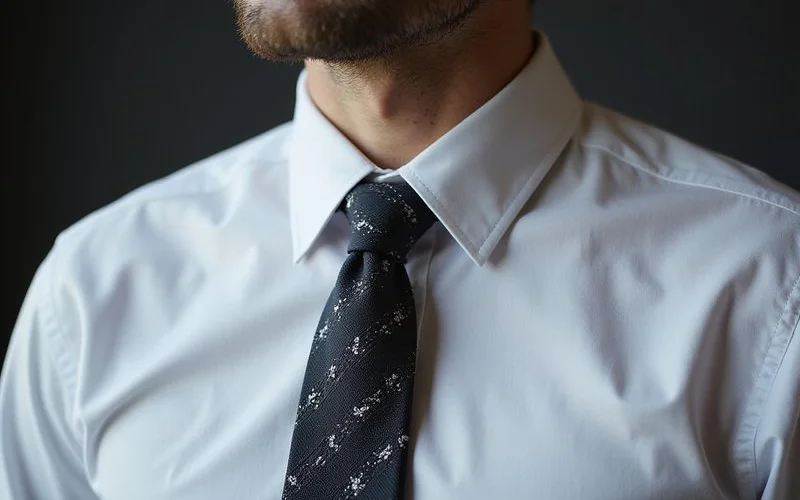
- Flatters: long or narrow faces, as the horizontal line broadens the features.
- Best knot: full Windsor or double Windsor.
- Signals: assertive, continental, finance-friendly.
Avoid wearing a thin four-in-hand knot with a wide spread. The small triangle gets lost in the gap and the look falls apart.
The Point Collar
The classic forward point has a narrow spread, usually under 60 degrees, with long tips angling down toward the chest. It has been the default shape of conservative business dress for a century and still has a valid place in traditional legal and government settings.
- Flatters: round or wide faces, because the vertical angle slims the jaw.
- Best knot: four-in-hand or Prince Albert.
- Notes: always use collar stays, or the points will curl.
The Semi-Spread
Landing between the two, the semi-spread is the quiet default of the well-dressed daily rotation. Approximately 100 mm between points lets it accommodate a half-Windsor without looking either bold or old-fashioned. If you are unsure what shape flatters your features, this is the safe centre line.
The Cutaway
An extreme spread, sometimes close to horizontal, the cutaway shows off the knot and the sides of the neckband. It is currently popular with creative professionals and fashion-aware executives around Fitzroy and Richmond. It needs a substantial knot to hold its own, otherwise the openness looks unbalanced.
- Best for: making a statement, creative industries, tieless wear.
- Caution: may feel too bold for a conservative interview.
The Button-Down
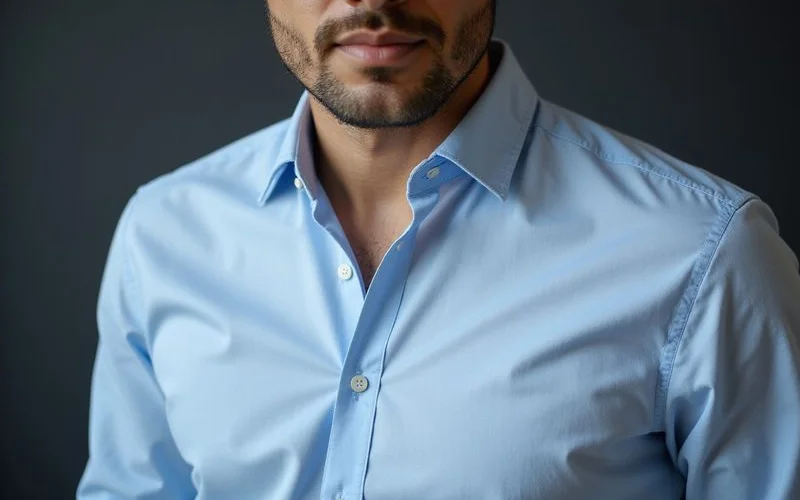
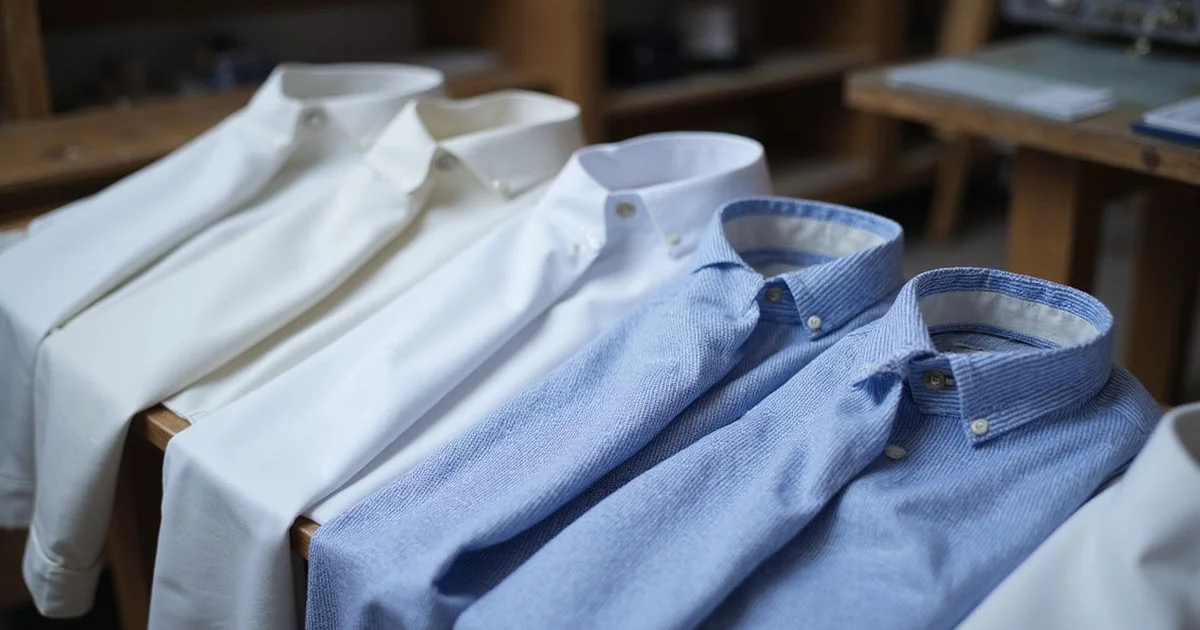
Introduced by Brooks Brothers in 1896 for polo players whose collars kept flapping in the wind, the button-down is now the king of smart casual. A high-quality soft button-down has a gentle S-curve, called “the roll,” that machine-pressed collars cannot replicate.
It pairs brilliantly with Oxford cloth, flannel, and chambray, and works in the relaxed environments of tech offices, media studios, and the increasingly casual bayside crowd around Brighton and St Kilda. It is considered too casual for double-breasted suits or evening wear.
The Club Collar
A rounded variant first associated with Eton College in the 1850s, the club collar is a distinctive vintage detail. It softens strong jaw lines and photographs beautifully, but it demands a polished outfit around it or it can drift into costume territory.
The Tab Collar
A small hidden fabric tab pulls the two collar points together behind the knot, forcing the tie forward into a dramatic arch. Daniel Craig wore one for most of the recent Bond films, which brought it back into view. It is for devoted tie wearers who enjoy a little theatre.
Matching Collar to Face Shape
| Face Shape | Preferred Collar | Why It Works |
|---|---|---|
| Round | Point | Vertical line lengthens the face |
| Long or oval | Spread or cutaway | Horizontal line broadens features |
| Square | Club or semi-spread | Rounded softness balances the jaw |
| Heart | Semi-spread | Balances a wide forehead |
| Diamond | Spread or cutaway | Widens the jaw to match cheekbones |
Matching Collar to Knots
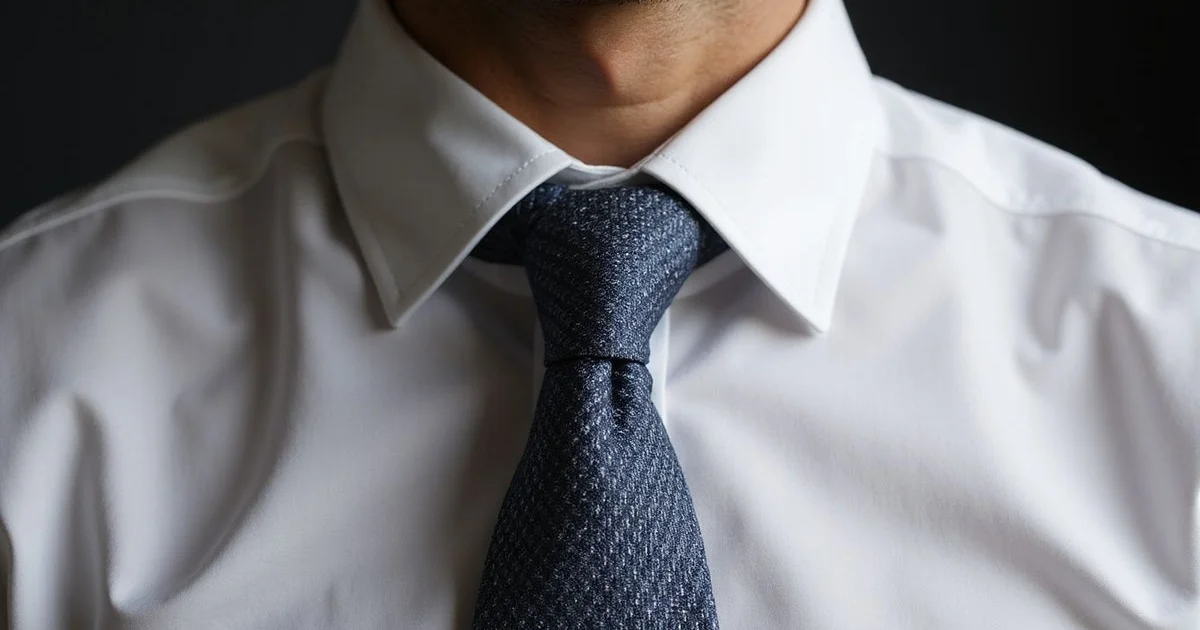
Pair large knots (full Windsor) with spread or cutaway collars. Medium knots (half-Windsor) live comfortably with semi-spreads. Small knots (four-in-hand) belong on point and button-down collars, where their narrow geometry has context.
Collar Height Is the Forgotten Variable
Most off-the-rack shirts use a 38 mm collar band. Men with longer necks often benefit from a taller 44 to 50 mm band so the collar fills the space between shoulder and jaw. Shorter necks suit a lower 25 to 32 mm band to avoid the collar digging into the chin. A custom shirt lets you specify this to the millimetre.
The Case for Custom
A well-cut collar has to coordinate with your neck shape, your jaw, your shoulders, and the jacket it disappears under. Off-the-rack shirts cannot account for all those variables at once. At One Tailor, we make custom shirts where you choose the exact point length, spread angle, and band height. If you would like to test drive different shapes in person, book a consultation and we will walk you through the options before you commit to anything.
Jason Nick
Expert insights from the One Tailor team in Melbourne.