Altering Suits After Body Changes: What Really Works
An honest look at what tailors can and cannot do when your suits no longer fit after weight loss or weight gain, with realistic costs and timing.
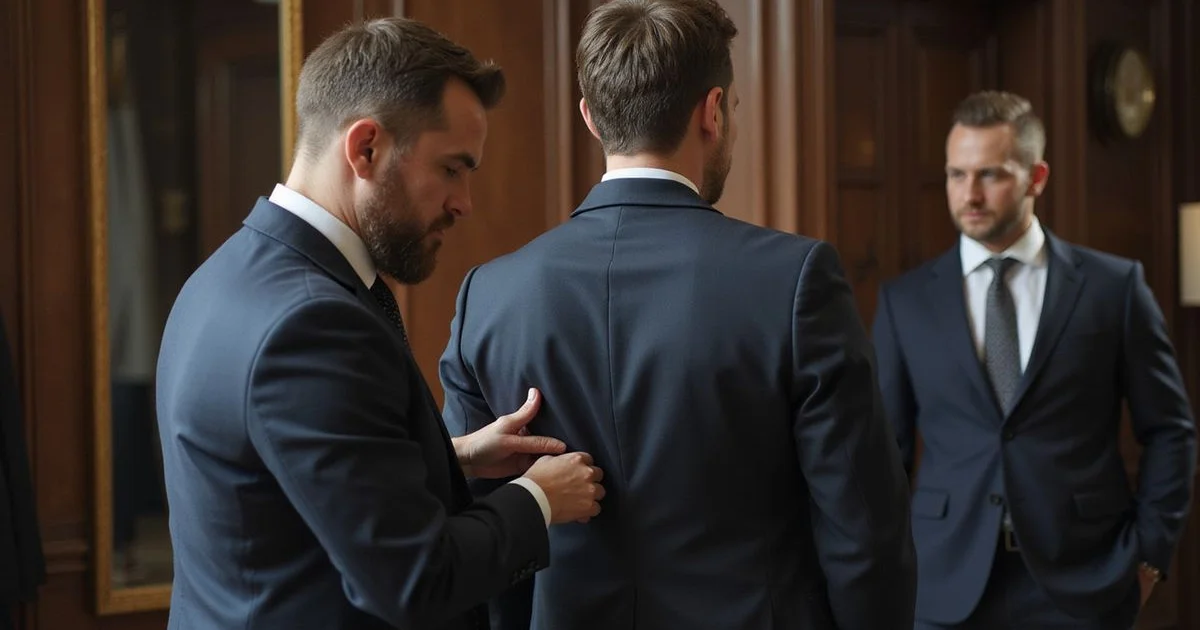
Few moments are as frustrating as pulling on a favourite suit for an important meeting and realising it no longer fits. It happens often to our clients. Life at a desk near Collins Street, a stricter training regimen, a new baby, an injury, a knee reconstruction that changes your stance, a long stretch of international travel. All of them alter the geometry the suit was originally cut for.
The good news is that a quality garment is designed to be altered, at least within limits. The less-good news is that those limits are more specific than most people realise, and trying to exceed them often damages the garment or produces a result you will never feel right in.
This article walks through what we actually do at One Tailor when a client brings in a wardrobe that has drifted out of proportion, and how we decide what is worth saving.
First Principle: Understand What a Suit Was Built For
Every garment has a certain amount of internal “give” designed in by the original maker. Quality tailoring houses leave generous inlays, meaning extra fabric folded inside key seams, precisely so future adjustments are possible. Mass-market factory suits often trim these inlays to zero to save on cloth cost, which is why they cannot be let out later.
Before quoting any major alteration, we open the lining and measure the inlays. This is the single most important diagnostic step.
Weight Loss: Taking Things In
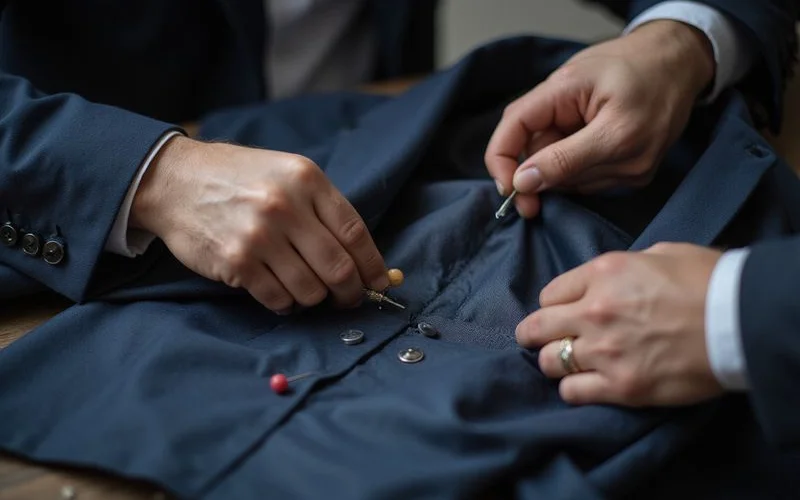
Reducing circumference is easier than expanding it, but it still has structural ceilings.
Jacket body. Side seams can typically be brought in by up to 50 mm of total circumference before the side pockets start migrating awkwardly toward the back. Beyond that point, the front panels no longer balance against the back and the garment looks distorted.
Trouser waist. The standard, low-risk reduction at the rear centre seam is 40 to 50 mm. Beyond that, the back pockets start to collide and the rise becomes uncomfortable when sitting. Major reductions require a full recut, meaning we remove the waistband and pockets and start from scratch, a significant job.
Leg taper. Cleaning up the leg line is often the single alteration that makes a client feel most transformed. A good taper respects proportion, balancing the knee width, hem opening, and rise.
Shirt bodies. Existing custom or quality off-the-rack shirts can be darted or slimmed at the side seams to eliminate the billowing “muffin top” look. This is usually inexpensive and high-impact.
Where Weight Loss Alterations Struggle
Shoulder width. Your jacket hangs from the shoulders. If your shoulders have genuinely shrunk, which sometimes happens after illness, rebuilding the shoulder is expensive (typically $220 and up) and rarely produces an invisible result. For most clients, we advise selling or donating rather than chasing the fix.
Length and stance. Removing more than 25 mm of jacket length distorts the button position relative to the pockets. The pockets start looking unnaturally close to the hem.
Weight Gain: Letting Things Out
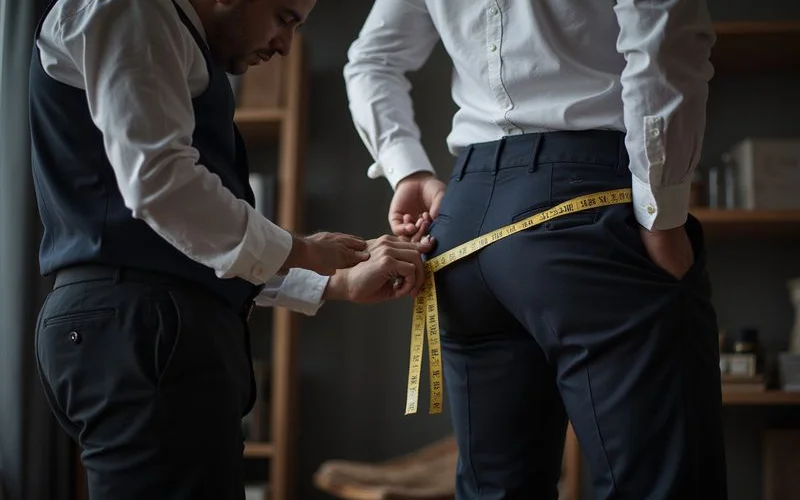
Letting out is a matter of what the original maker left you. You have no control over it except as a shopper choosing a quality brand to start with.
Trouser waist. Most quality trousers permit 25 to 40 mm of expansion at the rear centre seam. Beyond that, the back rise geometry breaks and the pockets distort.
Jacket body. Letting side seams out is only possible if inlays exist. We commonly find 15 to 25 mm of allowance on properly constructed jackets and zero on fused mass-market models.
The ghost stitch problem. Even when inlays exist, the previously hidden section of cloth has been protected from UV, sweat, and dry-cleaning chemicals. When exposed, it may reveal a slightly darker or differently textured line along the old seam. This is particularly visible on dark navy and charcoal wools under the natural Melbourne sunlight bouncing off Port Phillip Bay.
What Weight Gain Alterations Cannot Do
Chest expansion. The chest piece is the structural heart of a jacket. Its internal canvas, roll line, and lapel geometry are fixed during construction. You cannot meaningfully add chest room to a finished jacket.
Shoulder expansion. Impossible without creating fabric that does not exist.
The Four Key Diagnostic Questions
When a client brings a suit to our Lonsdale Street studio, we apply a four-part assessment.
1. Magnitude of Change
Alterations tend to be viable for shifts of roughly 5 to 7 kilograms. Larger changes usually move the body’s proportions beyond what a standard adjustment can accommodate.
2. Location of the Change
Midsection change is usually correctable. Gains or losses in the neck, shoulders, upper back, or thighs touch structural points that are much harder to adjust.
3. Construction Quality
A fully canvassed wool suit from a reputable maker is built to be modified. A fused construction at the lower end of the market often disintegrates or puckers when major seams are moved.
4. Fabric Integrity
We hold the trousers up to a strong window light. Thinning in the seat or inner thighs tells us investment in alterations will be wasted because the cloth is near the end of its working life.
Realistic Costs in Melbourne
| Alteration | Typical Cost (AUD) | Verdict |
|---|---|---|
| Simple hem or waist | $50 to $95 | Keep. High value. |
| Taper jacket sides | $85 to $160 | Keep. Transforms the look. |
| Recut trousers | $140 to $220 | Only for suits valued over $1,000. |
| Shoulder or collar work | $220 and up | Usually better to replace. |
When It Is Time to Let Go
Three signals tell us to advise replacement rather than alteration.
The alteration exceeds 50 percent of replacement value. Spending $300 to alter a three-year-old suit originally bought for $600 is rarely a sound investment.
The client will not feel confident in the result. A suit is about how you move and speak in the room. A garment that technically fits but feels slightly off will undermine the professional presence you bought it for.
The weight is still in flux. If your body is still changing, wait three months after stabilising before committing to major alterations. Altering twice weakens the cloth and wastes money.
The Custom Advantage, Long Term
This is where commissioning custom pays off over decades. When we make a suit at One Tailor, we keep your unique paper pattern on file. If your body shifts over the years, we can redraft from the existing pattern and sometimes remake whole panels if we have reserved inlay cloth. That continuity of record is something no factory suit can offer.
The Assessment Process
When you book an alteration consultation, here is the workflow we follow.
- Interior inspection. We open the lining to confirm available inlays.
- Live fit analysis. You try the garment on and we pin what is actually wrong, not what you think is wrong.
- Feasibility discussion. We explain the structural limits and trade-offs.
- Transparent line-item pricing. No surprises.
- Honest verdict. If the garment belongs in a donation bag, we will say so.
If a garment in your wardrobe deserves a second chance, book an alteration consultation or visit our alterations service page for more detail.
Jason Nick
Expert insights from the One Tailor team in Melbourne.